For schools, SENCOs and teachers
Veyra helps every child to be understood, showing schools how they focus, think and remember in a single lesson, so that teachers know what works, parents know how to help and the right support arrives years sooner.
No diagnosis. No labels. Just a clearer picture of how a student learns.
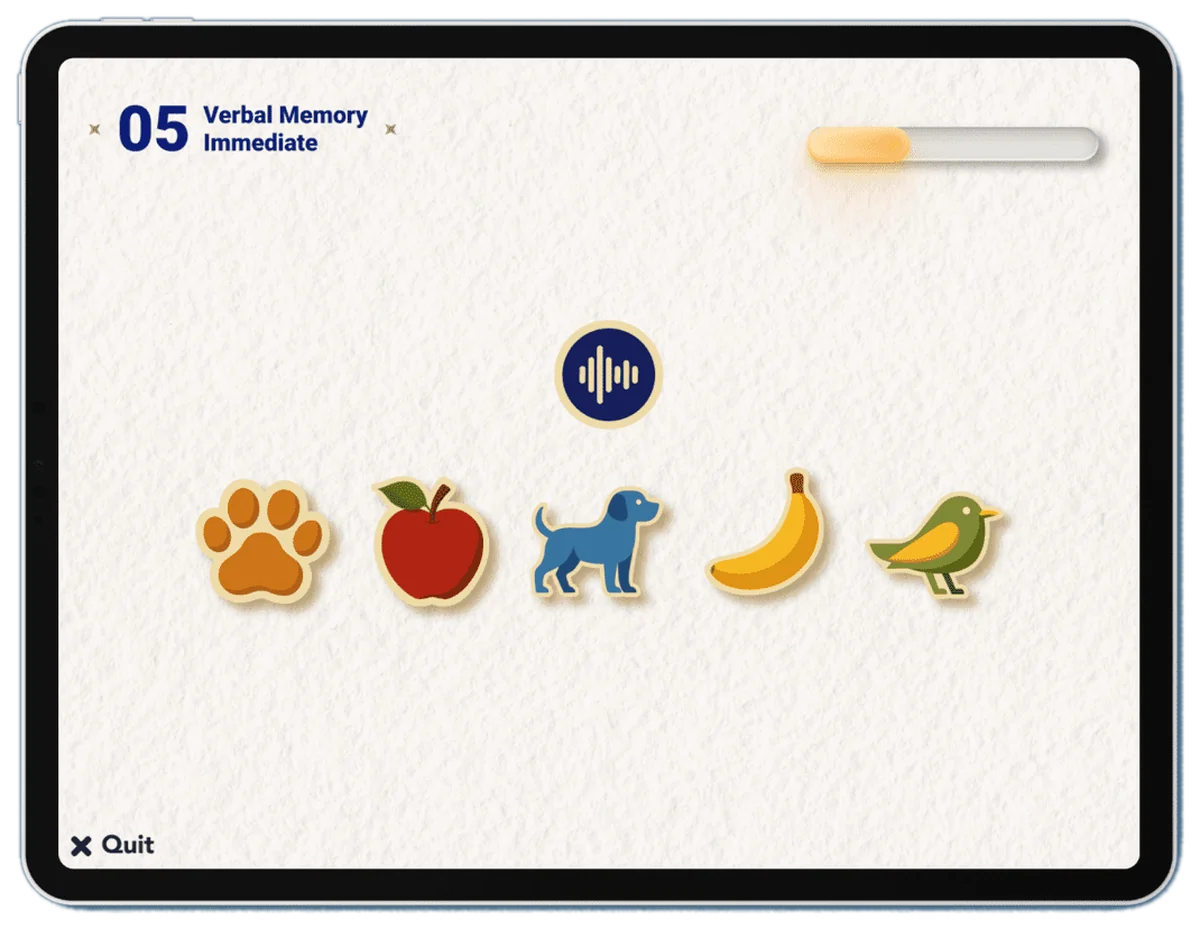
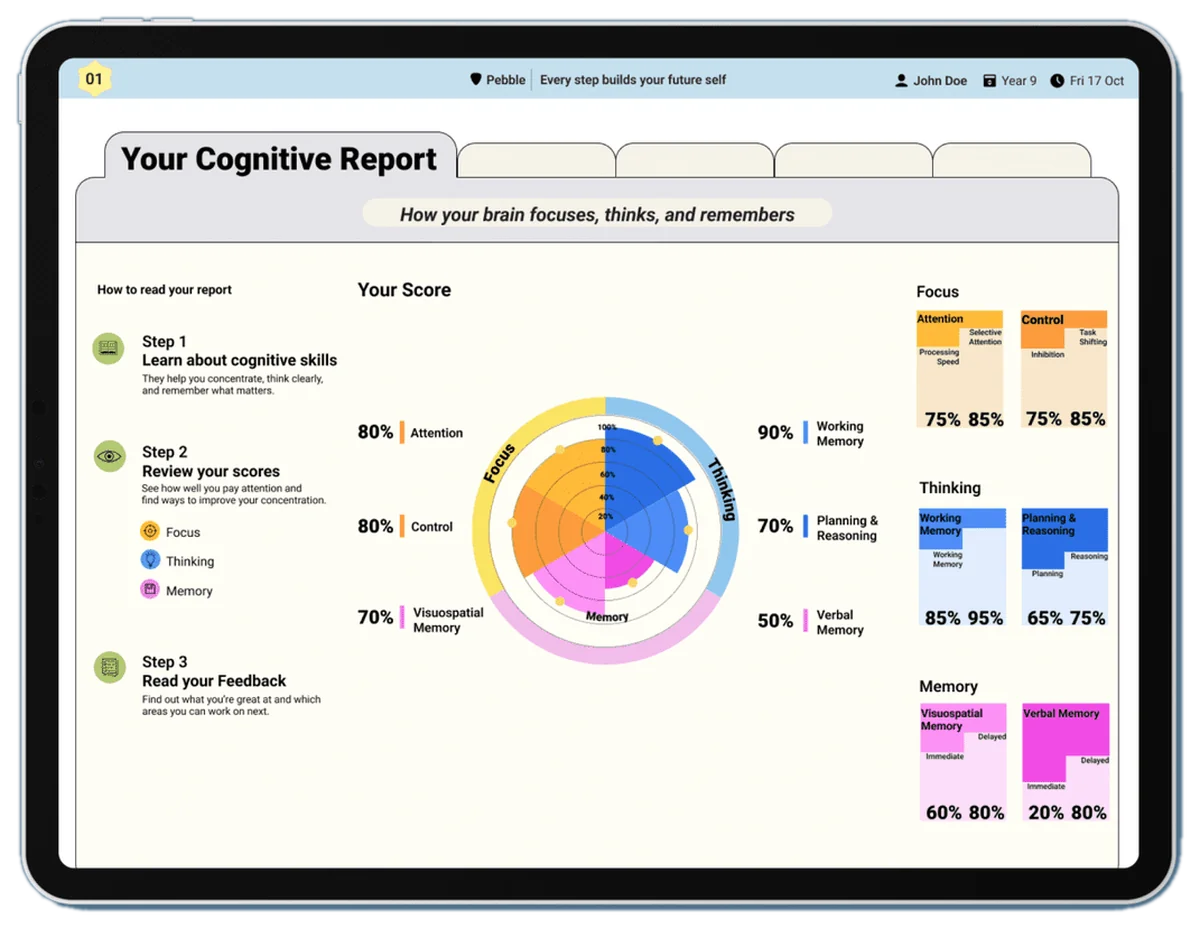
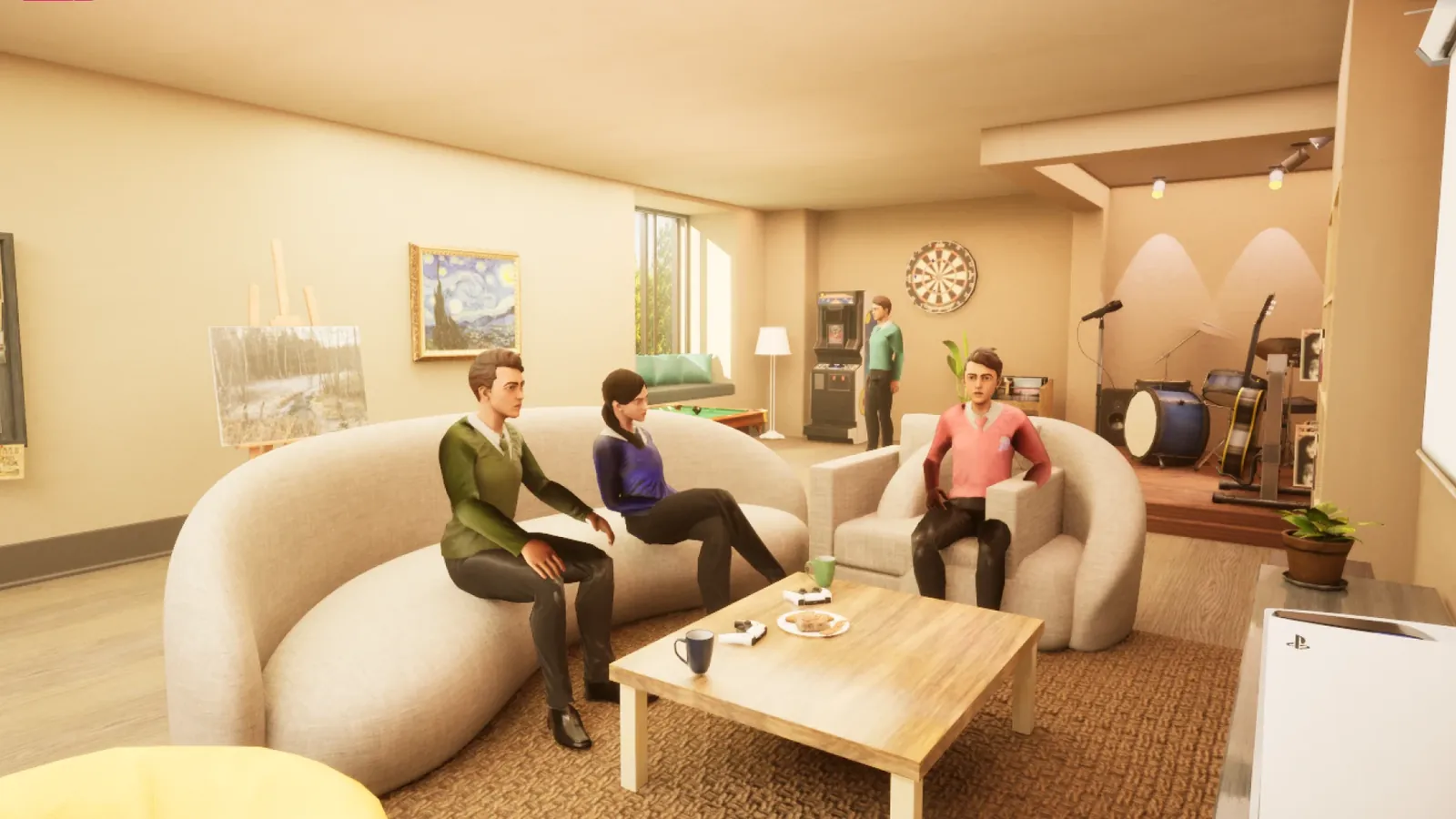
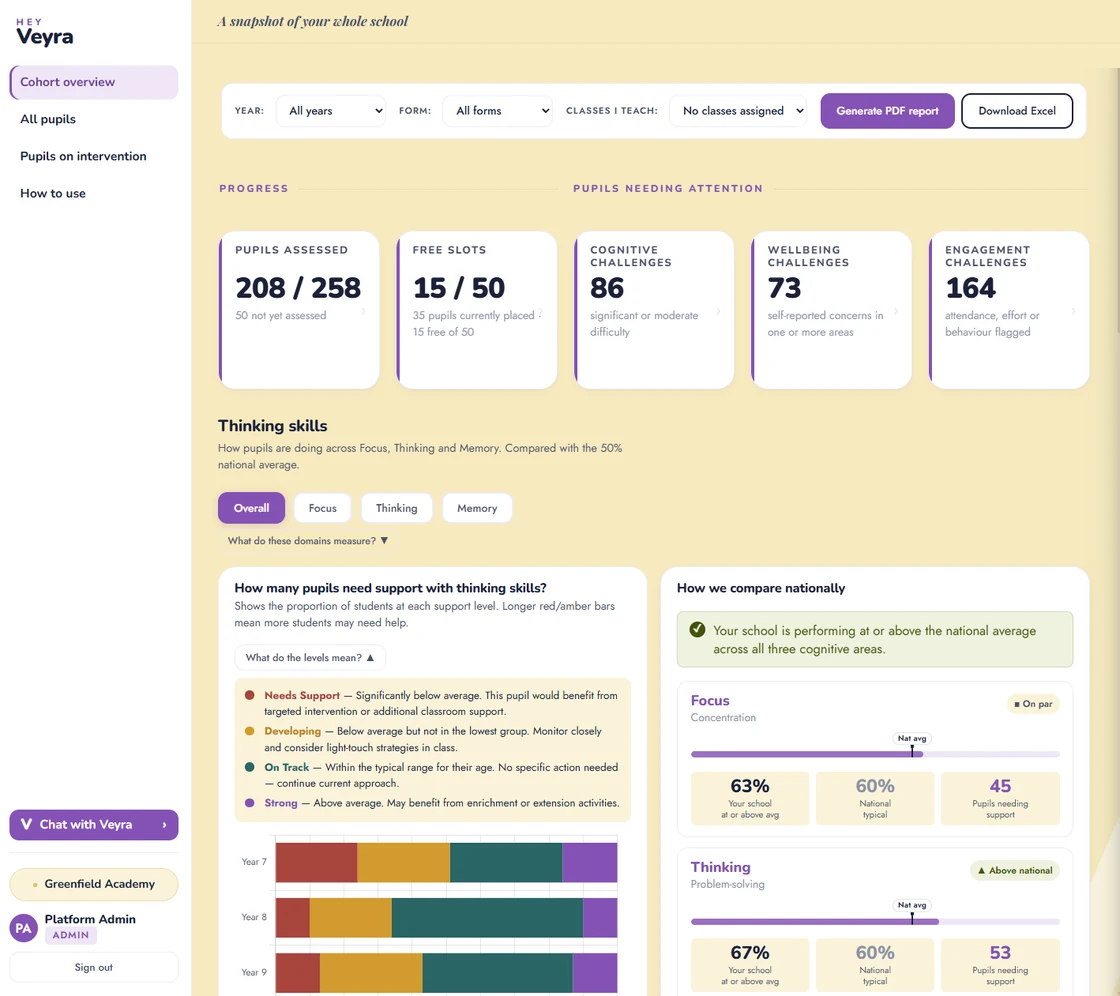
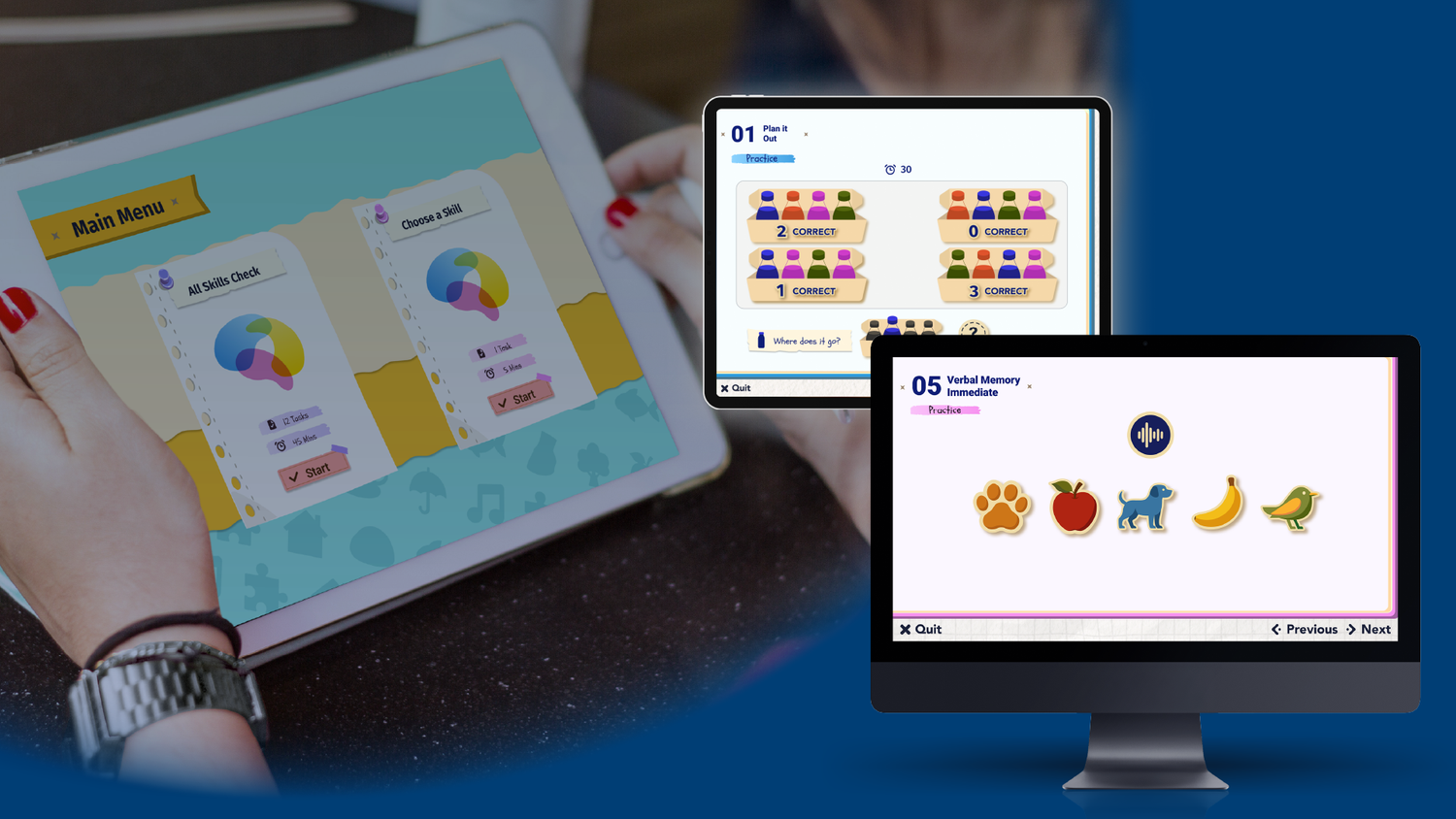
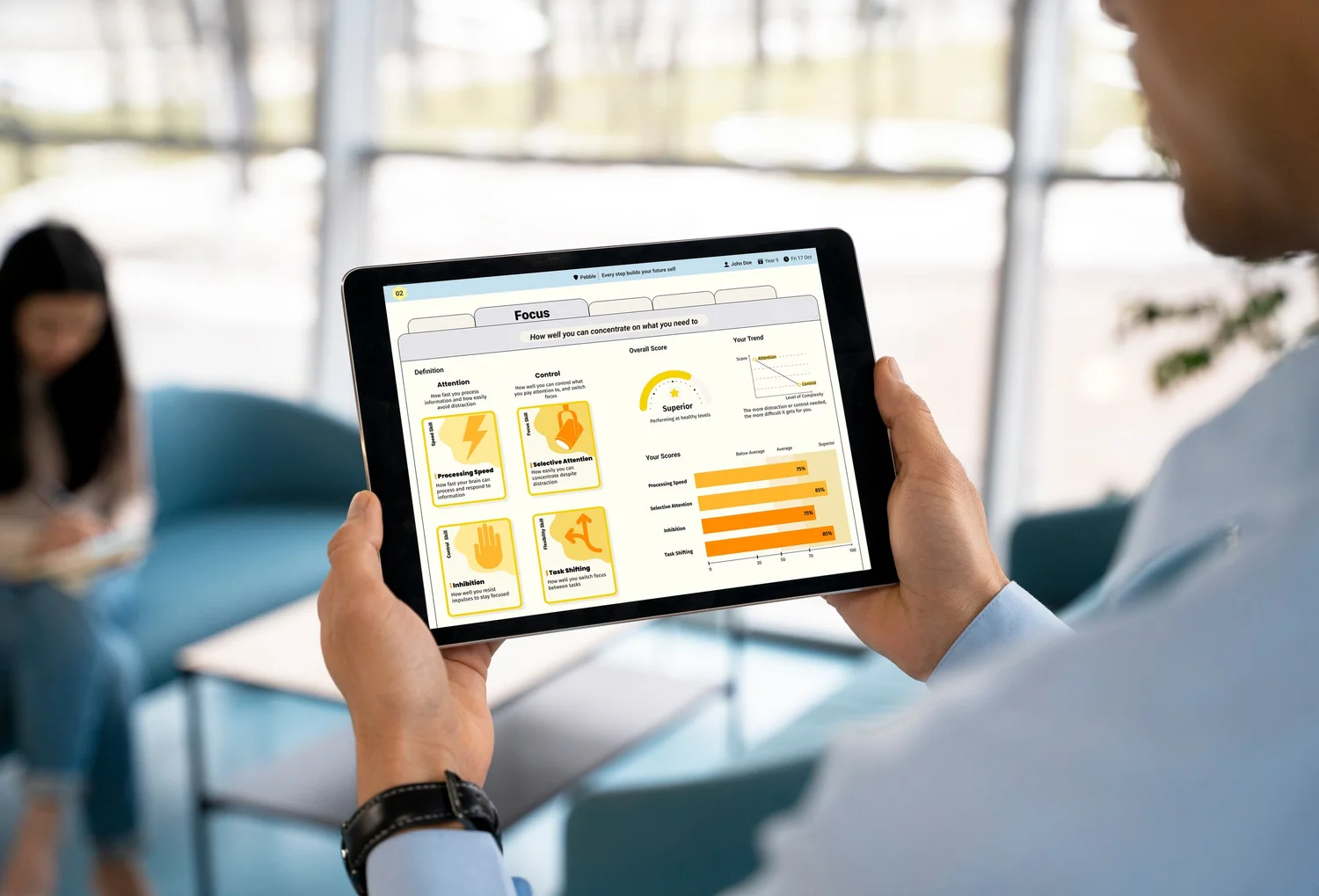
The platform, a live task, and the report it produces. Click any to look closer.
Trust
The detail behind each of these is on our evidence page.
The product, up front
The part every teacher recognises
They lose track halfway through a task. They struggle to get started. They drift, even when they're trying their best. It's easily read as “not concentrating”, and it's usually neither effort nor ability. No one has yet seen how that student's mind works. Meanwhile, the formal route to answers takes years.
“I know the ones who are slipping. What I don't always have is the time, or the full picture, to know exactly what each of them needs.”— A secondary school teacher
“The referrals go in. Then we wait. And the student is still in front of us every Monday morning.”— A SENCO
How it works
A game-like assessment that takes around an hour measures twelve thinking skills across focus, thinking and memory. It runs on screen, can be led by any teacher, and it feels like an activity, not a test.
Every student gets a plain-English profile: strengths named first, difficulties explained clearly, and practical classroom strategies attached to each one. Written for teachers and parents, not specialists.
Students strengthen the skills that were identified inside a secure game world that's built to the standard of the games young people already choose to play, with Veyra as their guide and at their own pace.
Made to feel like a game
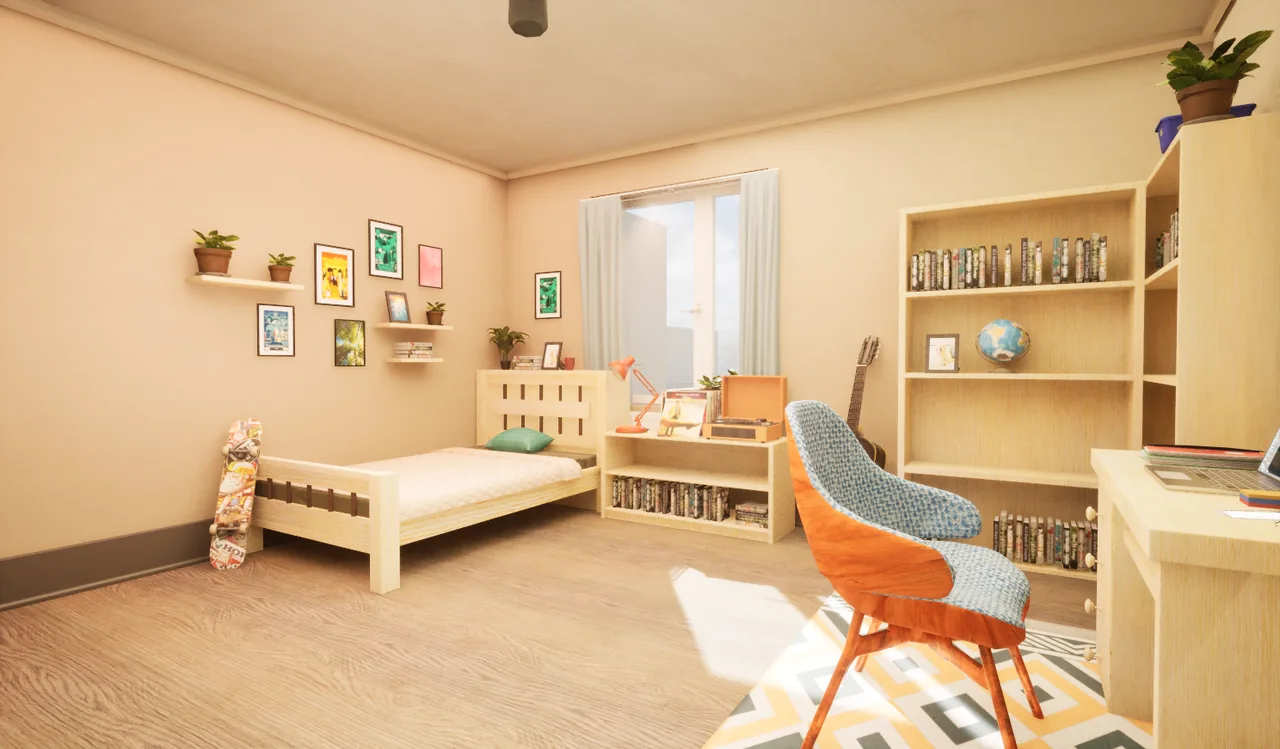
Veyra is a genuine game, built in Unreal Engine 5: a warm, naturally-lit world designed with adolescents and grounded in cognitive science. Inside it, a friendly guide notices the small wins, names them, and stays patient when things are hard.
It asks before it tells. And it never claims to be a teacher, a therapist or a doctor. When something is out of scope, it says so and points to a person.
Veyra, in-world. The guide is always a tap away.
The practical bit
Your class completes it on screen during a normal lesson, with no timetable upheaval.
Any teacher can run it. You don't need a psychologist in the room.
Clear profiles your whole team can pick up and use straight away.
Student data stays secure, the school stays in control, and we're here to provide training.
Why sooner matters
The wait many children face for assessment and support for neurodevelopmental needs after concerns are raised.
Children's Commissioner for England, 2024The proportion of teachers confident that referring a student for SEND support will actually get them the help they need.
NEU State of Education survey, 2026Teachers who say lack of access to specialist services is a significant barrier to inclusion in their school.
NEU State of Education survey, 2026The system is designed so that needs are “identified early and met consistently”, something that “cannot be achieved through referral systems alone. It must happen through normal classroom practice.”
— Every Child Achieving and Thriving, the government's schools white paper (2026)And the gap follows students beyond school: pupils with identified SEND are less likely to sustain education, employment or training after year 11 (DfE destination measures, 2023/24). The single biggest difference is understanding a student sooner. That's what Veyra is for.
Who's behind it
Veyra is made by a team with clinical and academic roots at King's College London and Imperial College London: psychologists, psychometricians and games-industry developers, with NHS clinical advisers, backed by UK government innovation funding.
From the blog
The most significant rethink of SEN provision in a decade. What it actually asks of schools, in plain terms.
Metacognition is not a buzzword. It is a structured, teachable cognitive skillset. Here are its six parts.
And why it's often not what you think. Three cognitive pathways behind disengagement, and what helps for each.
Start with one class or one year group. We'll help you set up, run the first session, and make sense of what comes back.