Twelve thinking skills. One lesson. No pass or fail.
Students complete twelve game-like tasks that measure how they focus, think and remember. Any teacher can run it, on screen, during a normal lesson, and every student leaves with their strengths seen, not just their struggles.
Game-like activities, each with an untimed practice round first, so the format never gets in the way of the measurement.
2
Veyra analyses performance
Response accuracy, speed and patterns are analysed to build a profile of cognitive strengths and potential learning needs.
3
Teachers receive reports
Clear cognitive profiles with practical, evidence-informed strategies, for the student, the class teacher and the SENCO.
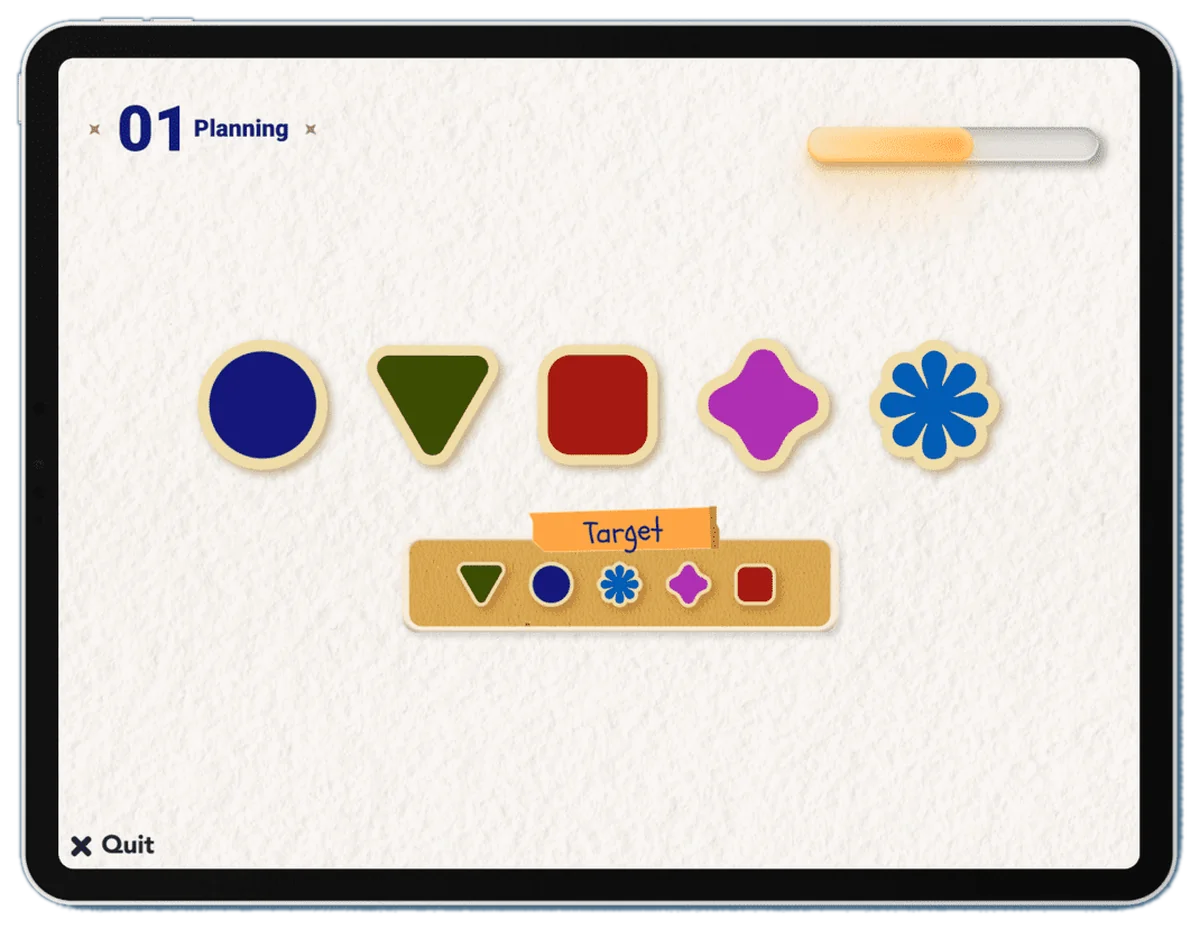
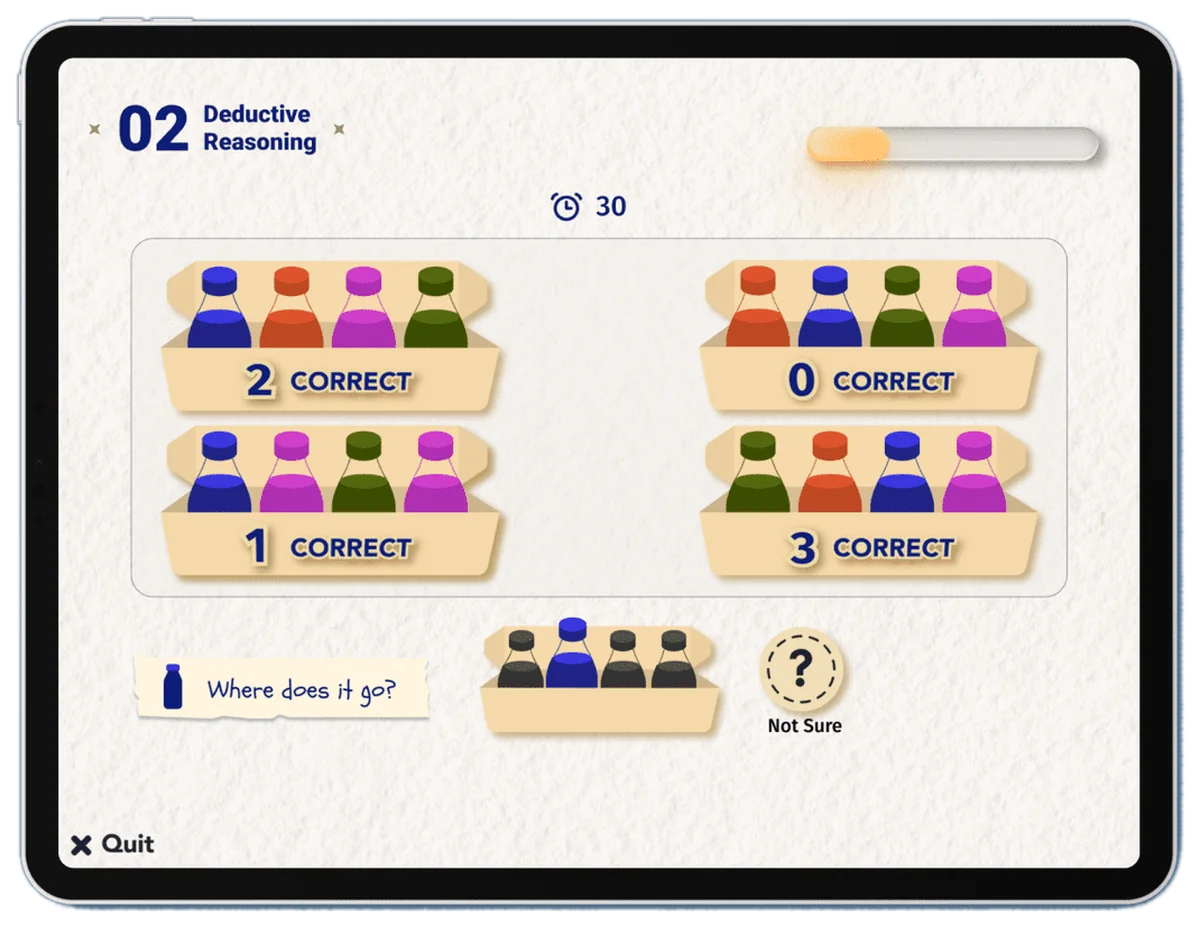
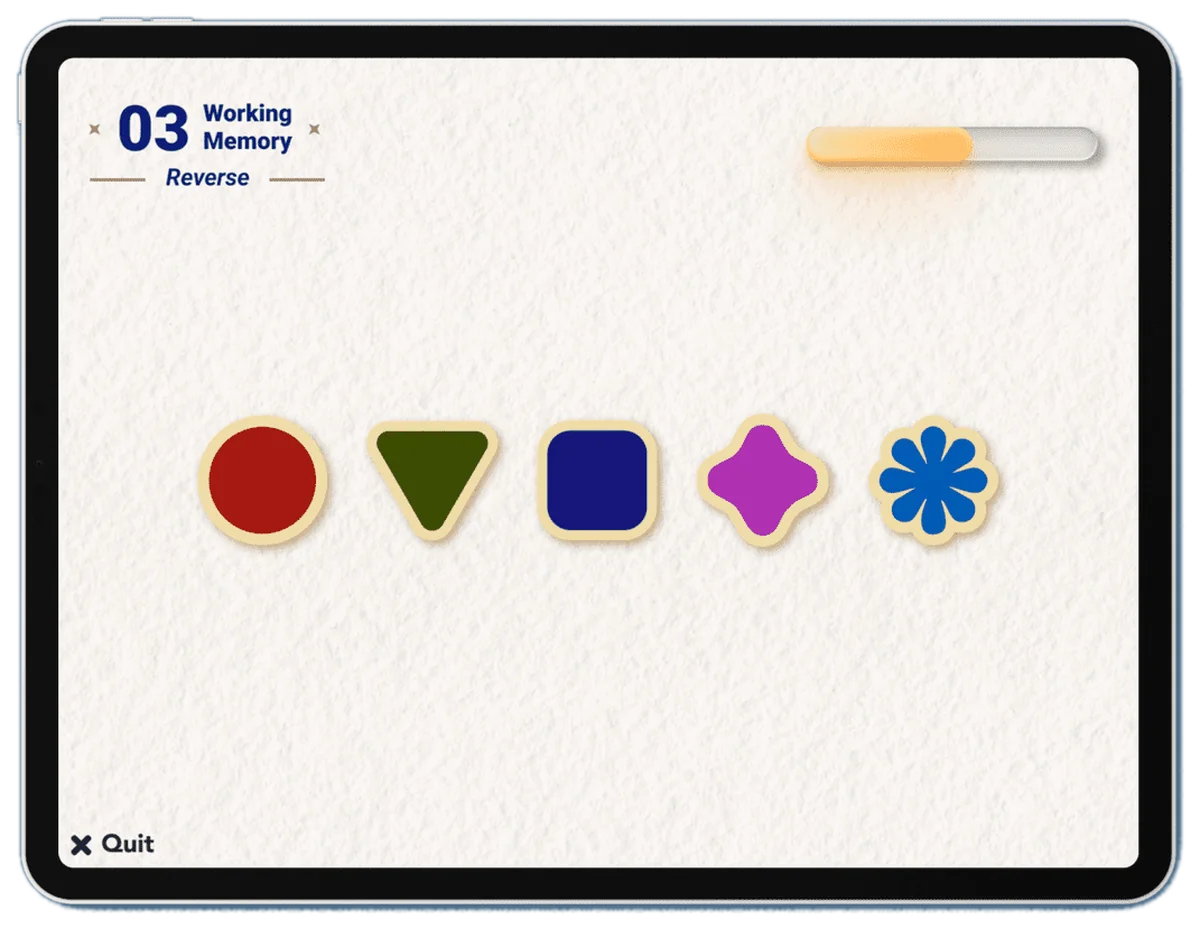
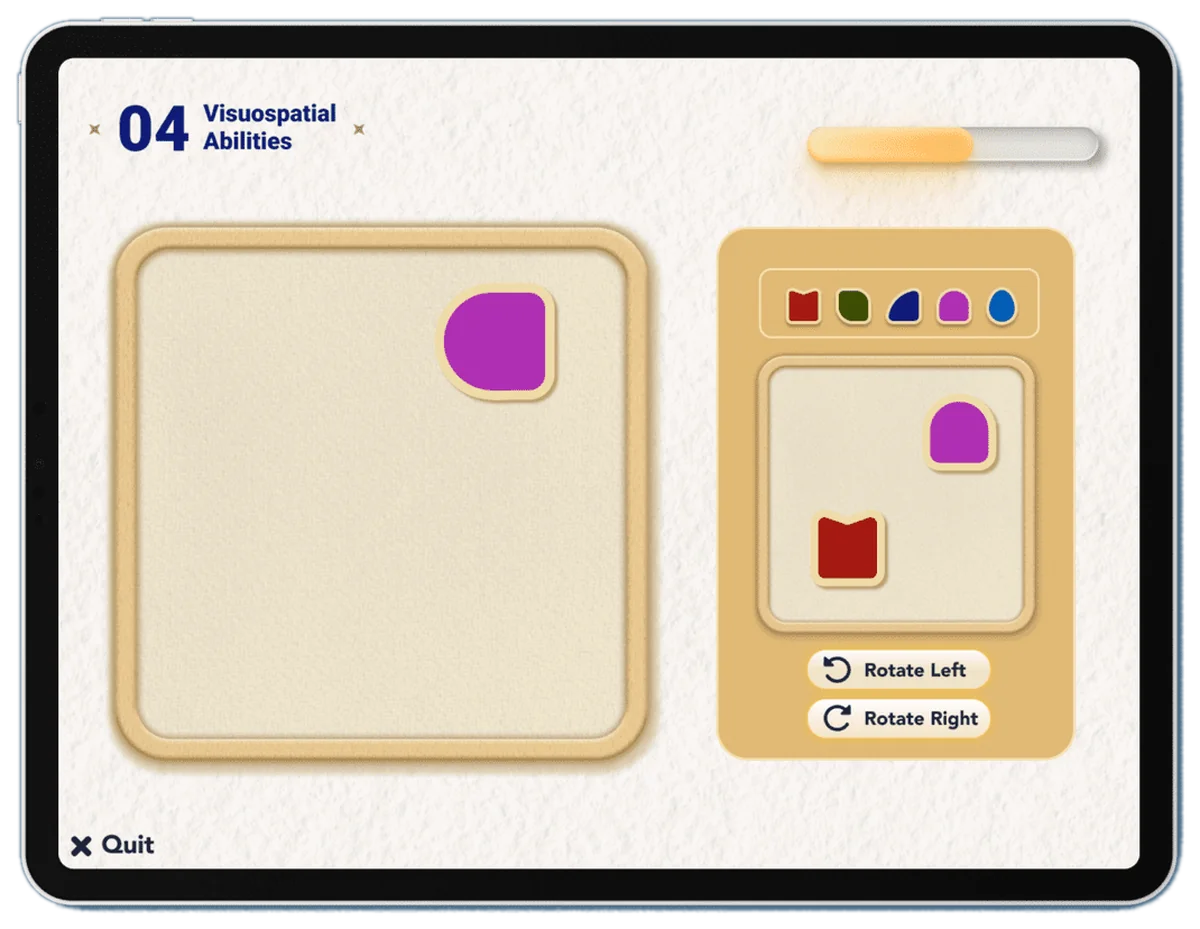
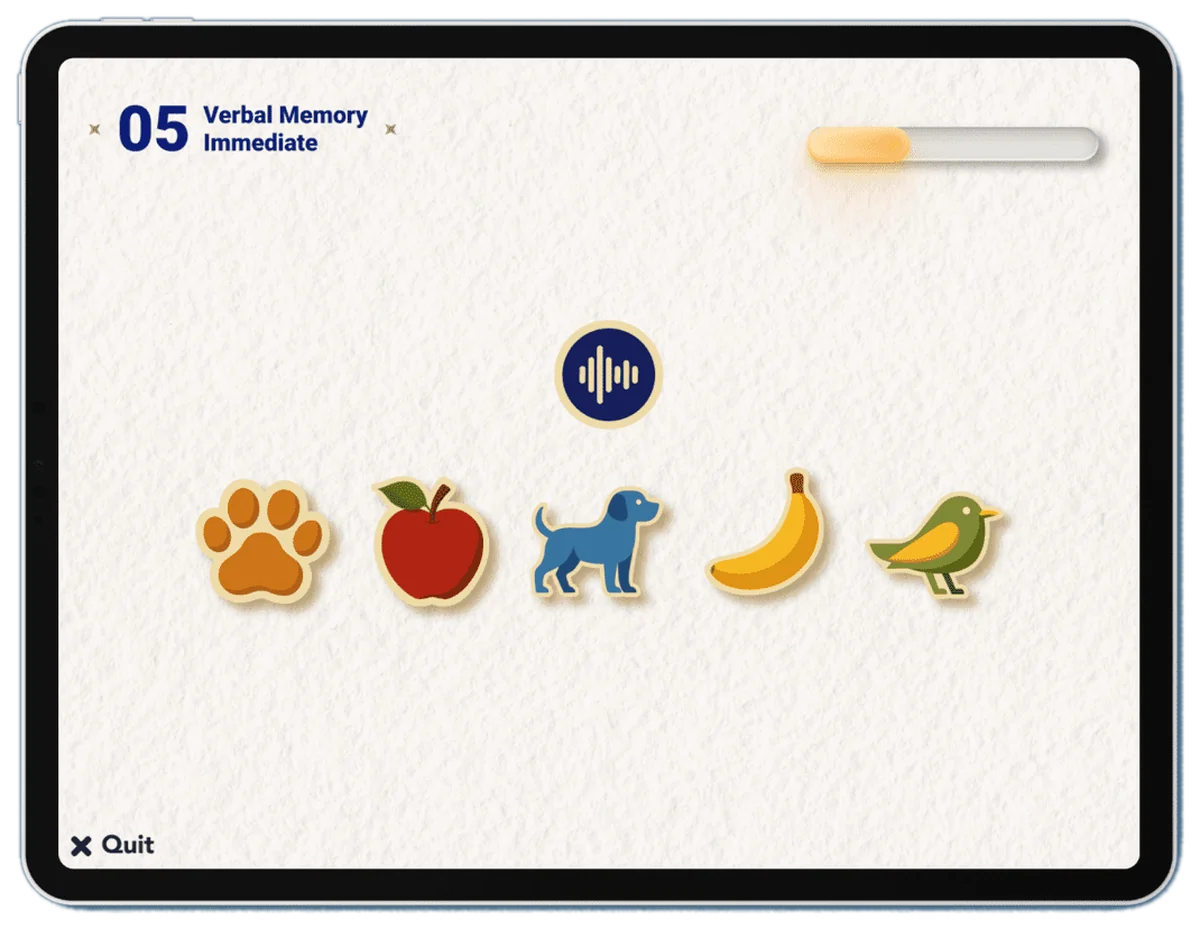
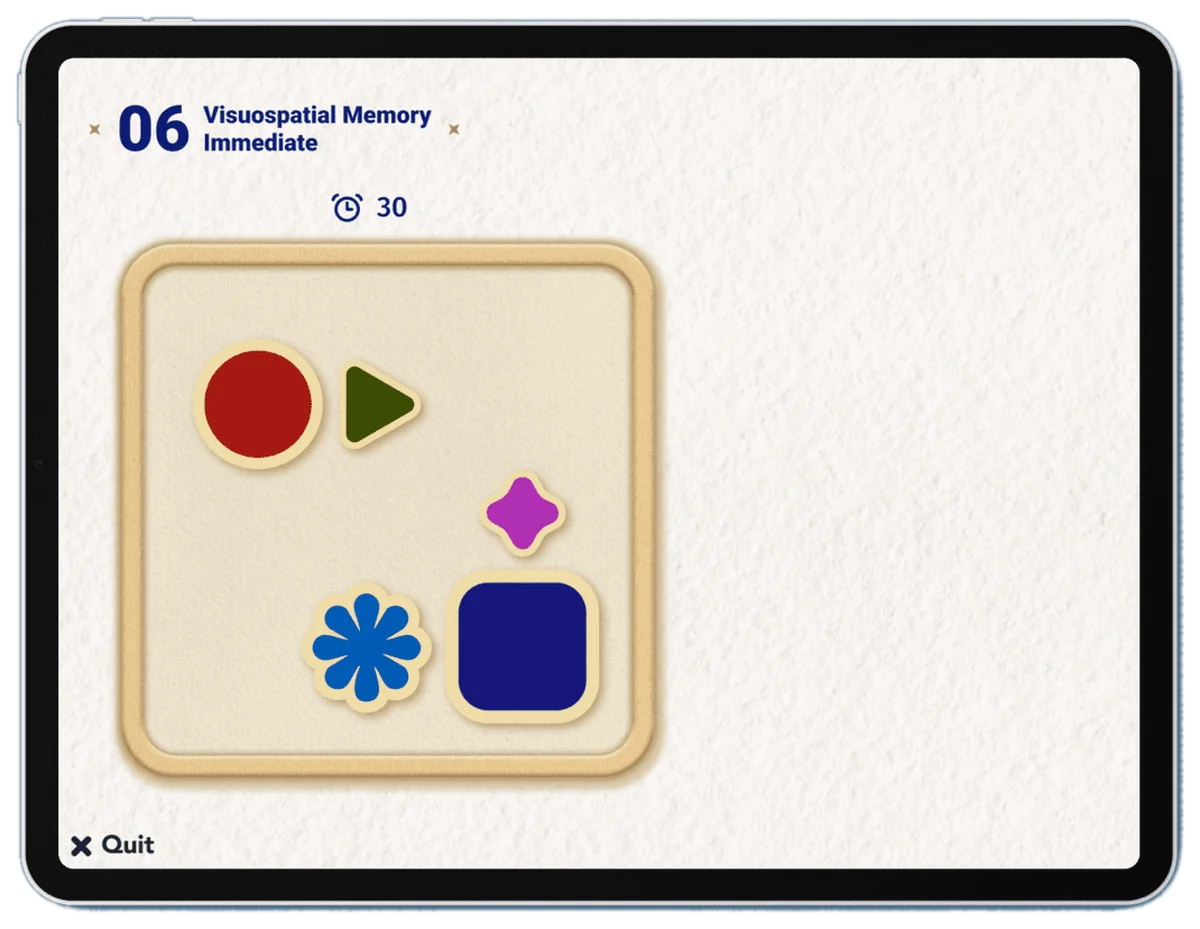
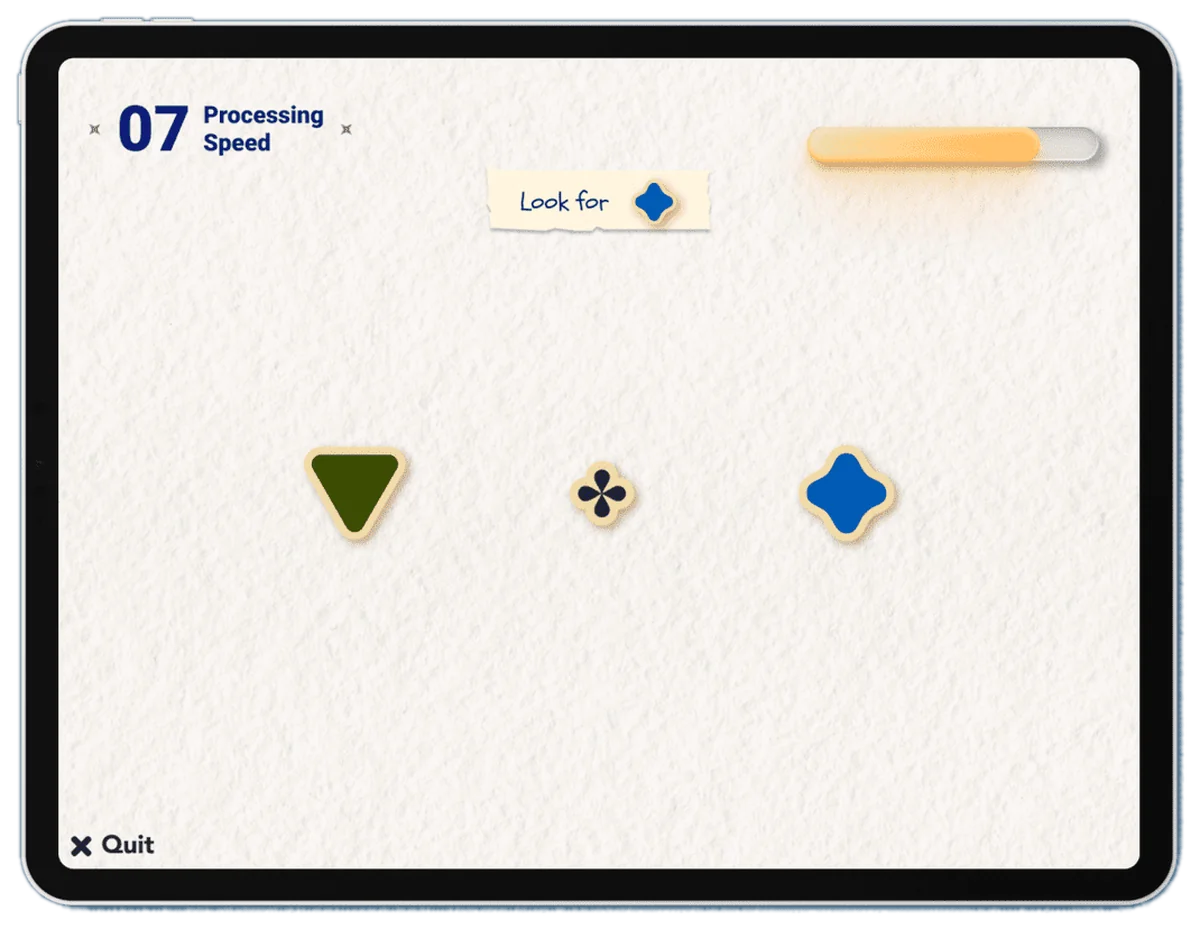
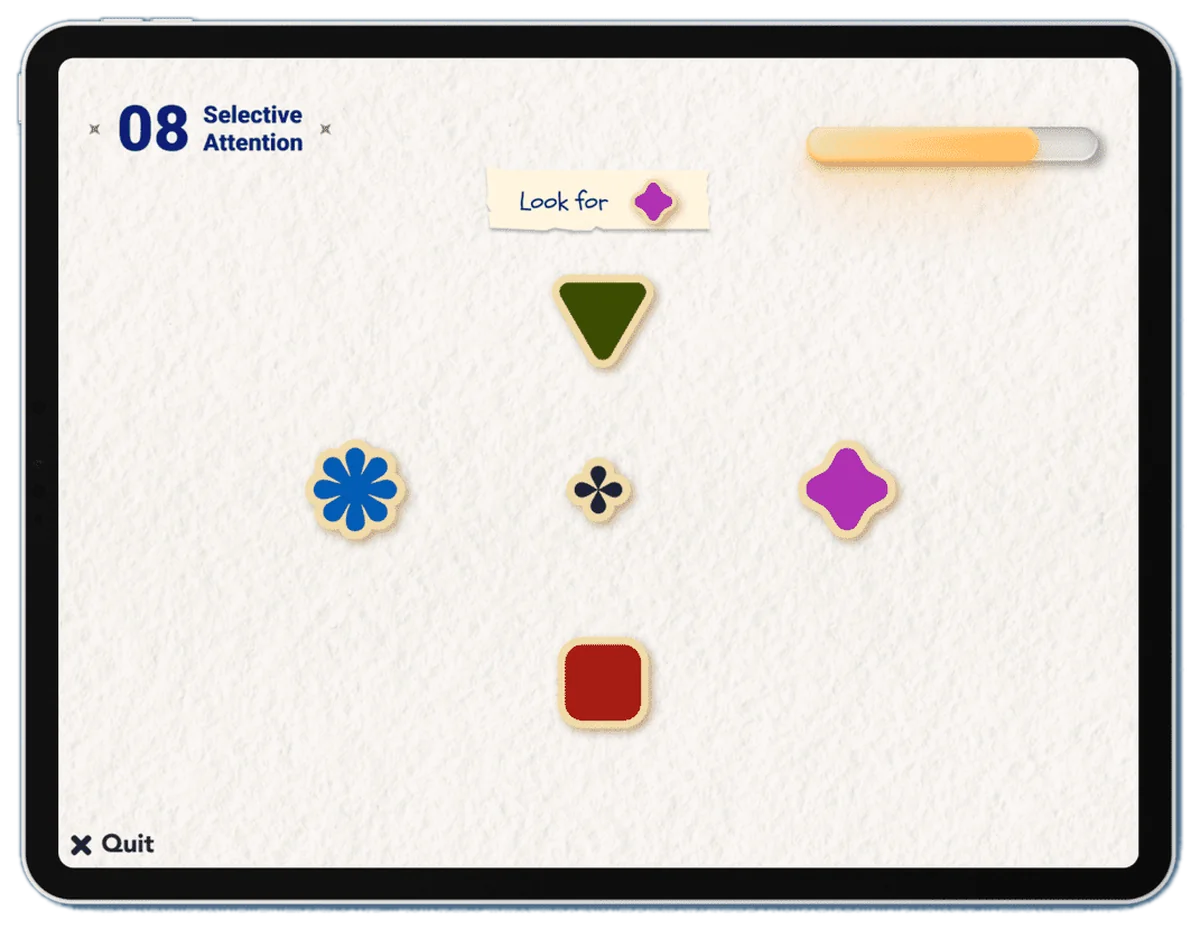
The twelve tasks, as students see them.
One game-like task for each skill. Swipe through the actual screens.
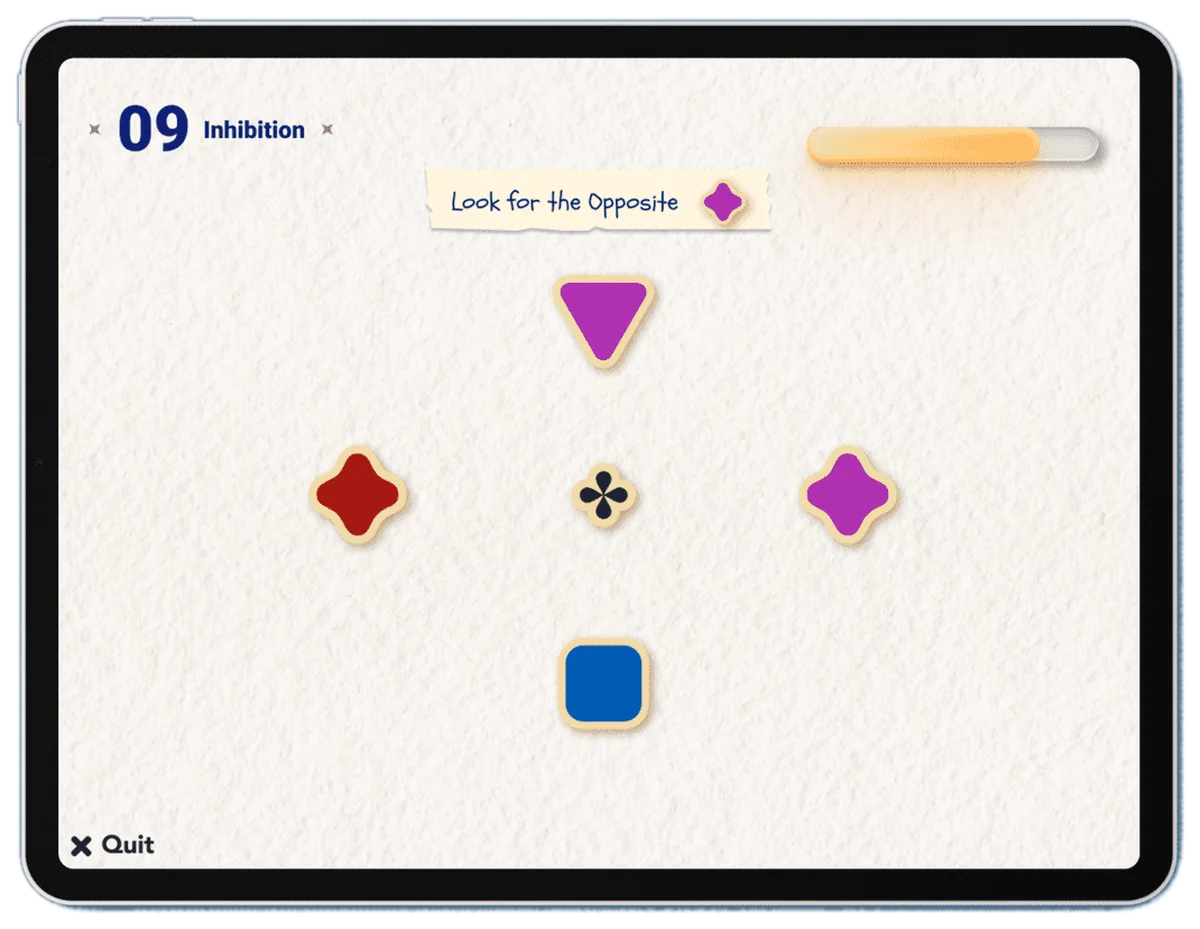
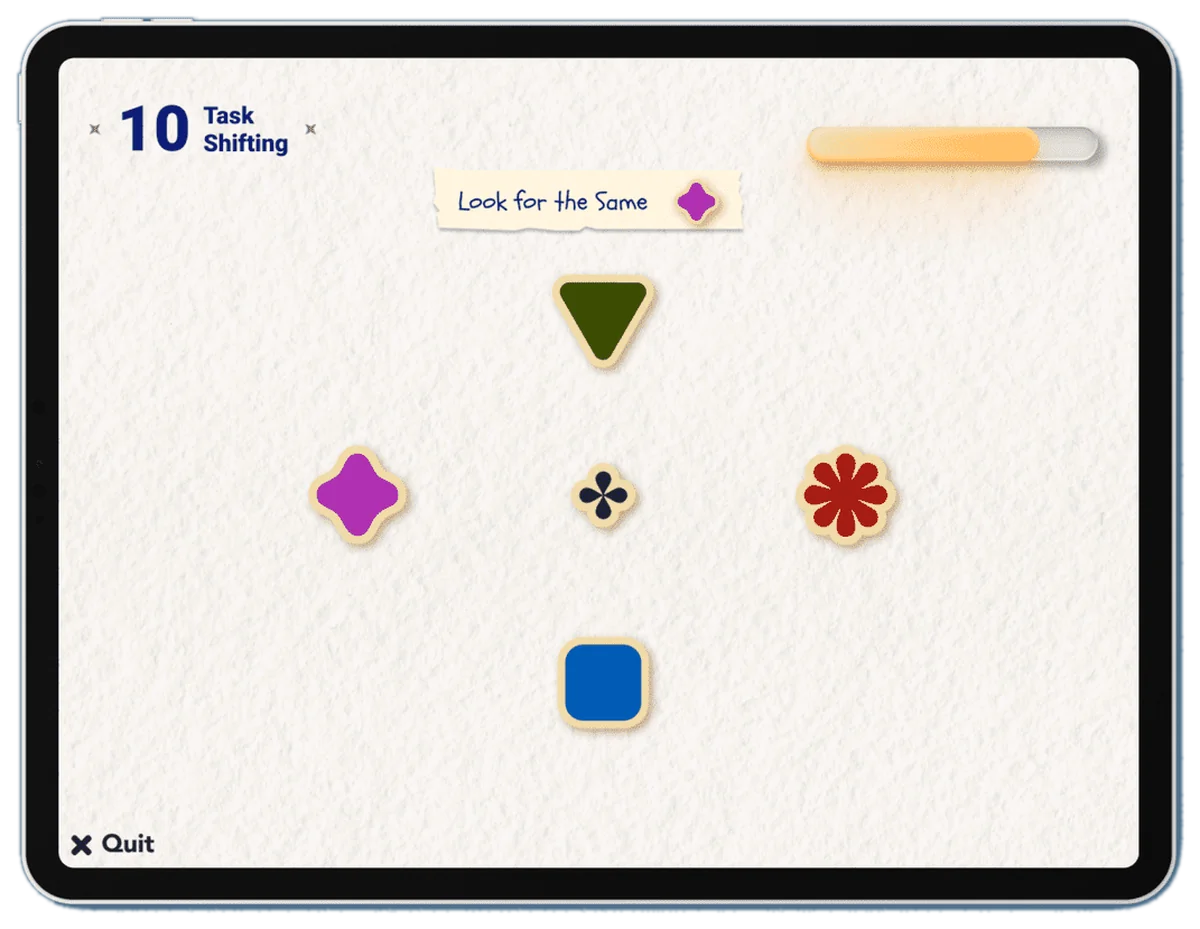
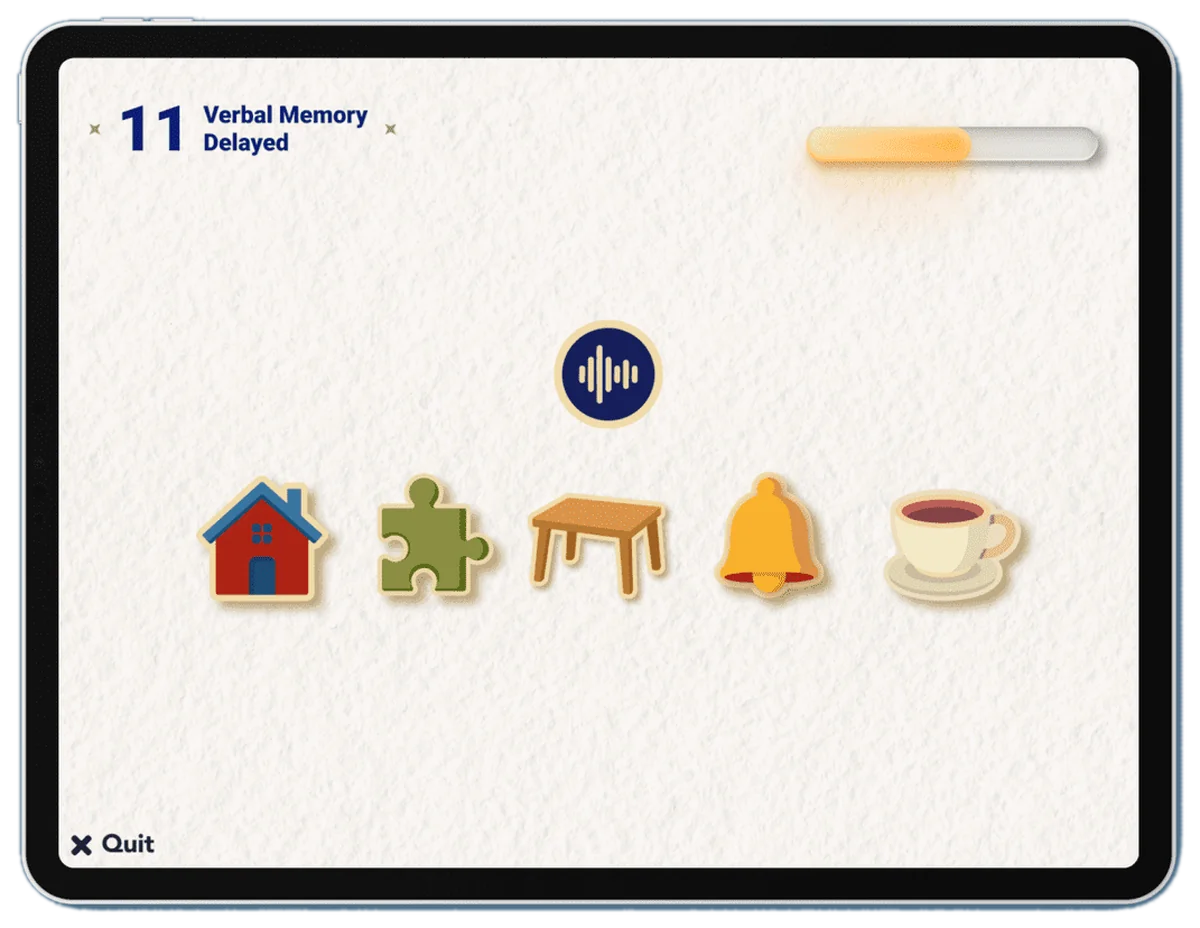
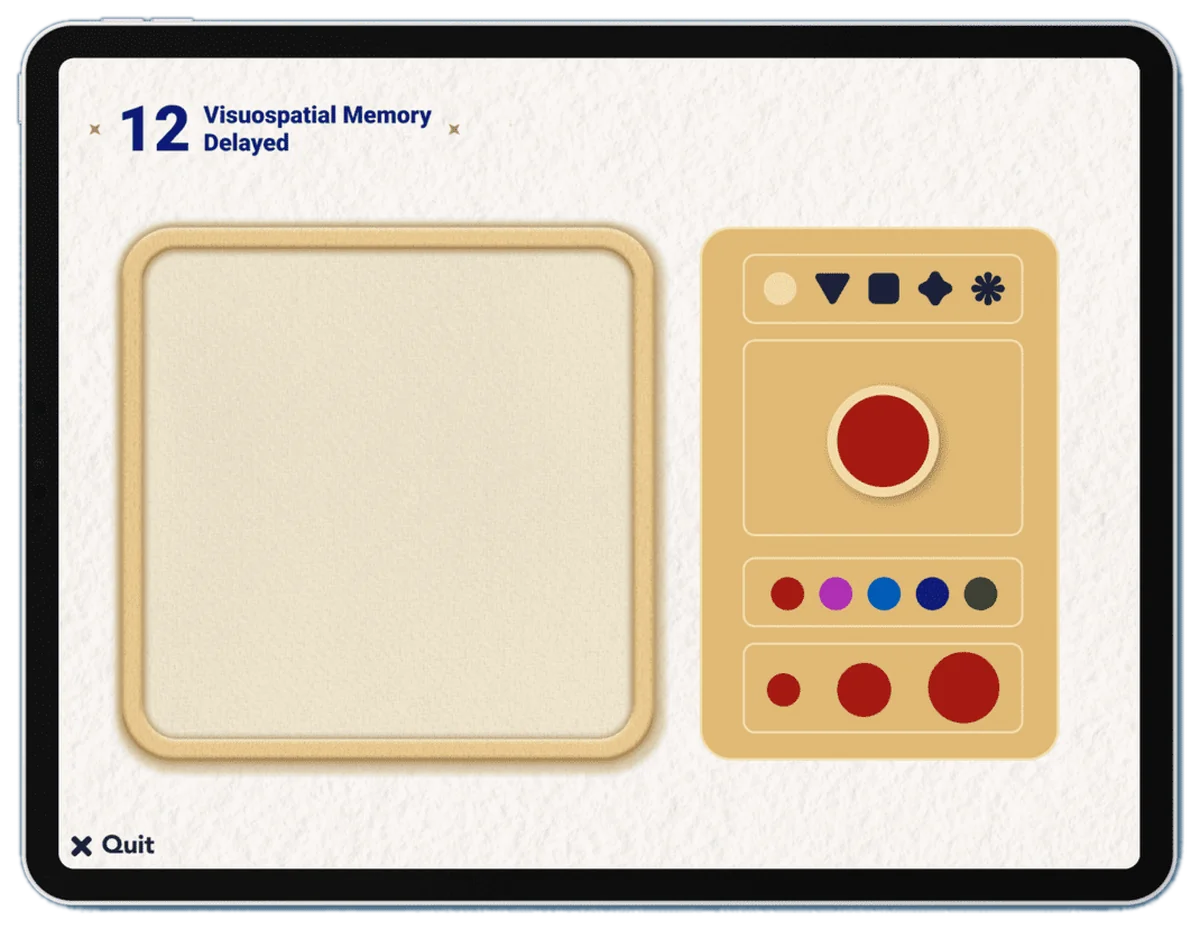
PlanningHow well you can plan ahead.Deductive ReasoningHow well you can solve problems.Working MemoryHow well you can hold information in your head and work with it.Visuospatial AbilitiesHow well you can manipulate objects in your head.Verbal Memory ImmediateHow fast you can learn new verbal information.Visuospatial Memory ImmediateHow fast you can learn visual information.Processing SpeedHow fast and accurately can you respond to information.Selective AttentionHow well you can deal with distraction.InhibitionHow well you can supress what you want to do in order to meet a goal.Task ShiftingHow well you can switch focus between tasks.Verbal Memory DelayedHow well you can remember verbal information later.Visuospatial Memory DelayedHow well you can recall visual information later.
In the same sitting, students also answer thirty plain-English questions about how life is going: sleep, confidence, friendships, getting to school. Cognitive results and wellbeing land side by side, so the picture of each student is whole.
What it measures
Twelve domains across focus, thinking and memory.
Students struggle for different reasons, so support has to fit the individual. That's why the Skills Check doesn't stop at an overall score. It identifies the specific skills each student finds harder, and what helps for each.
Tap any skill to see what it measures ↓
The three pillars
What the areas mean, and what helps in class.
How a student learns
Tap a pillar to see what it means, and what helps in class ↓
Focus: attention vs executive control
Focus is about how easily a student can concentrate on what they need to do. When students struggle to focus, it's usually down to either attention or executive control.
Attention is the most basic form of focus: how quickly and accurately a student can notice information through seeing or hearing and respond to it. Executive control is about managing attention: resisting distractions, stopping impulsive responses, and shifting focus between tasks when needed.
Knowing which is harder guides the support. If attention is the main difficulty, slowing the pace of learning and presenting information more clearly helps. If executive control is the main difficulty, reducing distractions, limiting task switching, and seating the student nearer the front are often more effective.
Thinking: working memory, planning & reasoning
Thinking refers to how well students can work with information in their head and solve problems.
Working memory is the amount of information a student can hold in mind at one time. It affects learning across all subjects, particularly maths and science. When it's weaker, tasks should be broken into smaller steps before starting. Planning is how well a student thinks ahead before beginning a task; difficulties here lead to impulsive work, missed steps, or confusion about timelines. Reasoning is how well a student solves problems logically. When it's weaker, students benefit from being taught clear problem-solving strategies rather than being expected to work them out independently.
Memory: verbal and visual
Memory refers to how quickly students can learn new information and how well they can remember it later. It divides into verbal and visual memory.
Verbal memory is how easily a student learns and recalls information presented in words: spoken explanations or written text. Visual memory is how easily a student learns and remembers what they see, including what something looks like and where it is.
Most students are stronger in one than the other, which shapes how they revise best. Mind maps and diagrams suit stronger visual memory; repetition and verbal rehearsal suit stronger verbal memory.
The details schools ask about
Designed for real classrooms.
One lesson long
The full pack fits a normal lesson, with practice rounds built in. No revision, no preparation. Practising would only distort the measurement.
Any teacher can run it
Delivered on screen with clear instructions. No psychologist needed in the room, and we're on hand if you'd like training.
Culture-fair by design
Tasks minimise language and cultural bias, and are localised across fifty-five languages. They measure thinking skills rather than background knowledge, for fairer results for every student, including those with English as an additional language.
Adaptive difficulty
A two-stage adaptive system adjusts task difficulty to each student, so the assessment stays engaging for every ability level. This adaptive technology is patent-protected, exclusive to Veyra, and developed with UK government funding.
What it is not: Veyra is not a diagnostic tool and does not label students. It provides structured cognitive insight that supports teachers, SENCOs and families in understanding how a student thinks and learns. Professional judgement always comes first. Validation work with UK secondary schools is ongoing, led by our research team. More on the evidence →
Ready to see how your students learn?
Start with one class or one year group. We'll help you set up, run the first session, and make sense of what comes back.