Schools in England work to the SEND Code of Practice, and at its centre sits a cycle: assess, plan, do, review. The Code asks for assessment and review. What it does not supply is an instrument for the first step, and for attention and executive function, that gap has been left to the school.
An opinion is not an assessment.
Where attention and executive function are concerned, many schools have nothing to assess with. Reading has tests. Literacy difficulties have screeners and a well-served pathway. But for the child who cannot hold instructions in mind, cannot get started or cannot finish, the assess step is usually a teacher's observation: honestly made, and hard to act on.
“Jamie struggles to concentrate” is an opinion.
“Selective attention is Jamie's hardest area: here is his profile, here is what we tried, and here is what changed” is evidence.
The difference between those two sentences is the difference between a worry list and a support plan.
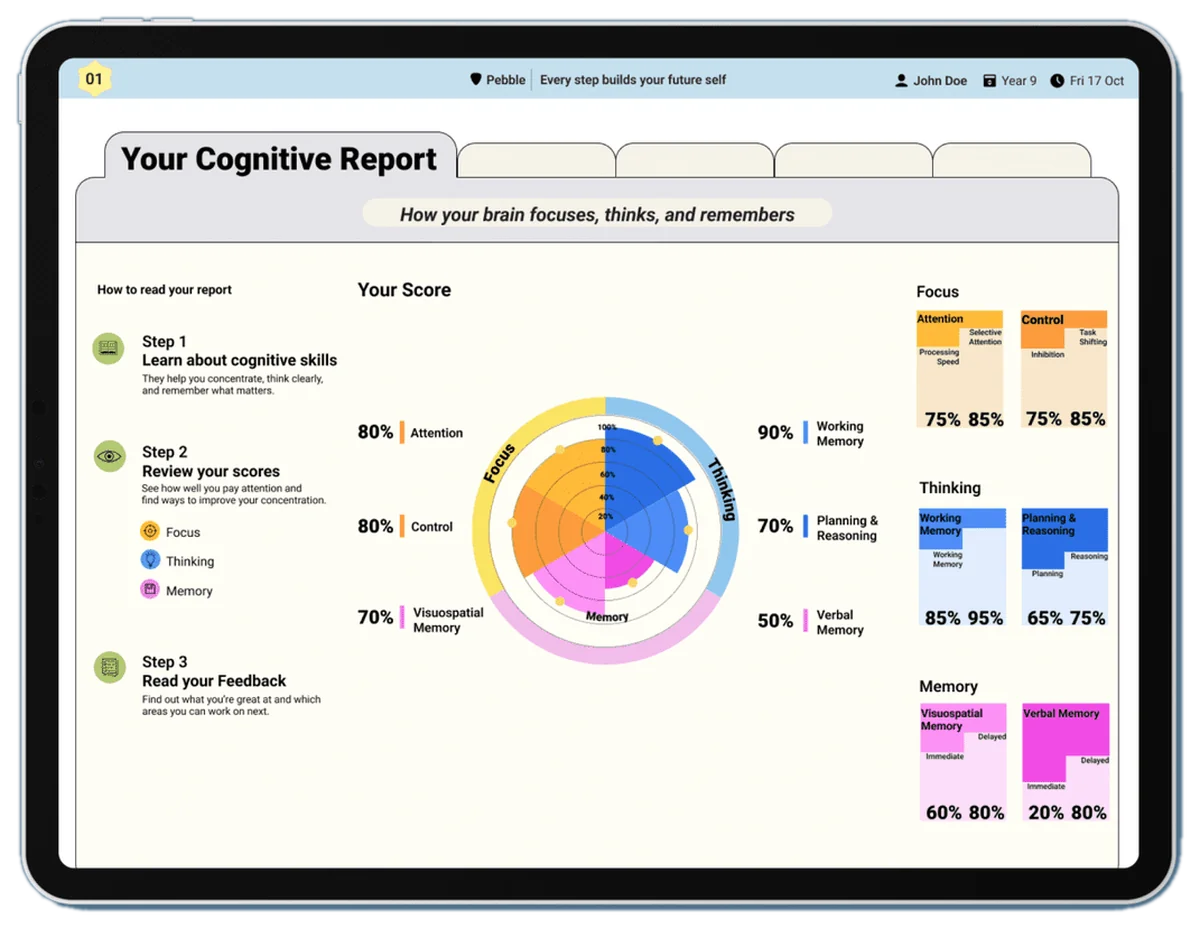
The paperwork is likely to get heavier.
The 2026 white paper, Every child achieving and thriving, proposes Individual Support Plans for children below EHCP level, and a duty on schools to set out how they identify and support need. Both need filling with evidence, and evidence is what the assess step cannot yet produce.
The pupils in the referral queue are the clearest case. They are the children an Individual Support Plan would catch in the meantime, and today they wait with no evidence being gathered at all.
Let the evidence write itself.
The graduated approach fails in practice when it turns into data entry: when the SENCO is retyping observations into a tracker at nine in the evening. It works when the evidence comes from the cycle running.
- Assess
- Veyra: Mind Skills Check. Each class takes 12 short tasks in a normal lesson, led by its own teacher, and a year group runs class by class. Every pupil is measured the same way, and the pupils who need a closer look are flagged.
- Plan
- Veyra: Student Reports. For the pupils who need more, each report starts from strengths, with an action plan and strategies for the classroom and for home. It exports to the pupil passport or support plan the school already uses.
- Do
- In class and at home. Staff use the strategies, and a parent-friendly report brings families in. Veyra: Pebble Academy, coming soon, will train the skills the Skills Check flagged.
- Review
- The termly re-check. Each pupil receiving more support is checked again every term, so the review starts from evidence, not memory.
Every score and flag is graduated-approach evidence, produced by the cycle running, not by somebody typing it up afterwards. That is what we mean when we say the reports are written for the people who act on them: the cycle the Code asks for, with the instrument it forgot.