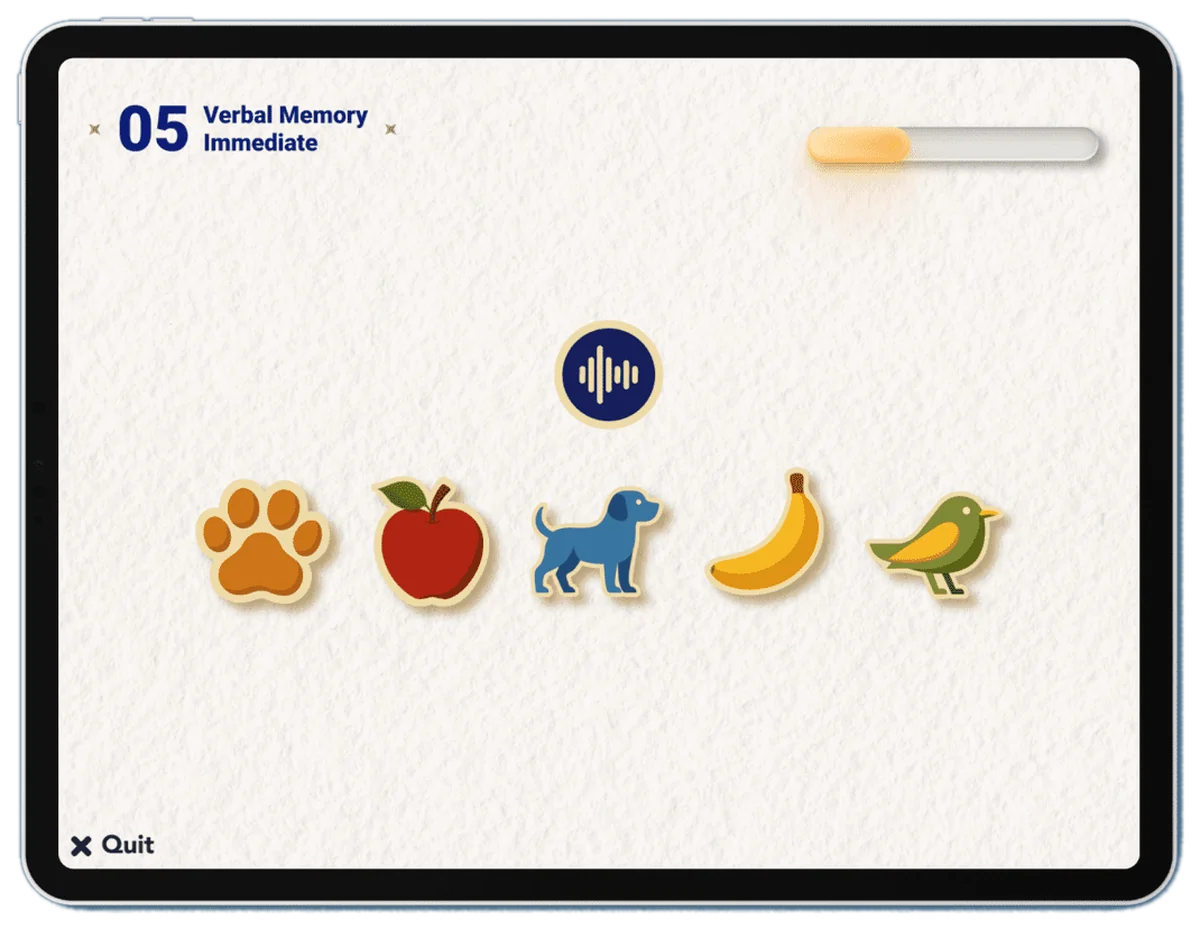
Many secondary schools run an ability test on entry: an hour of reasoning puzzles that predicts grades and flags pupils whose ability outstrips their performance. These tests do a real job. But there is a distinction every teacher should have to hand.
Ability tests measure the engine, not the driver.
A powerful engine can fail every journey.
Reasoning is how powerful a child's engine is. Attention and executive function are whether the driver can keep the car on the road: notice the right things, resist the wrong ones, hold the route in mind, plan the turns and finish the journey.
A child can have a powerful engine and fail every journey, and an ability test will tell you only that they are underachieving. Never why. And it gives the child nothing to do next.
The driver's skills can be measured.
Executive function is not one thing. It is a set of skills, with the attention systems underneath. In the Skills Check they sit across two of its three areas, focus and thinking.
- Working memory
- The mental notepad: how much a child can hold in mind and work with at once.
- Inhibition
- Holding back an impulse in order to meet a goal.
- Planning
- Thinking ahead before starting.
- Task shifting
- Switching focus cleanly from one task to the next.
- Processing speed
- How fast and accurately a child responds to information.
- Selective attention
- How well a child deals with distraction.
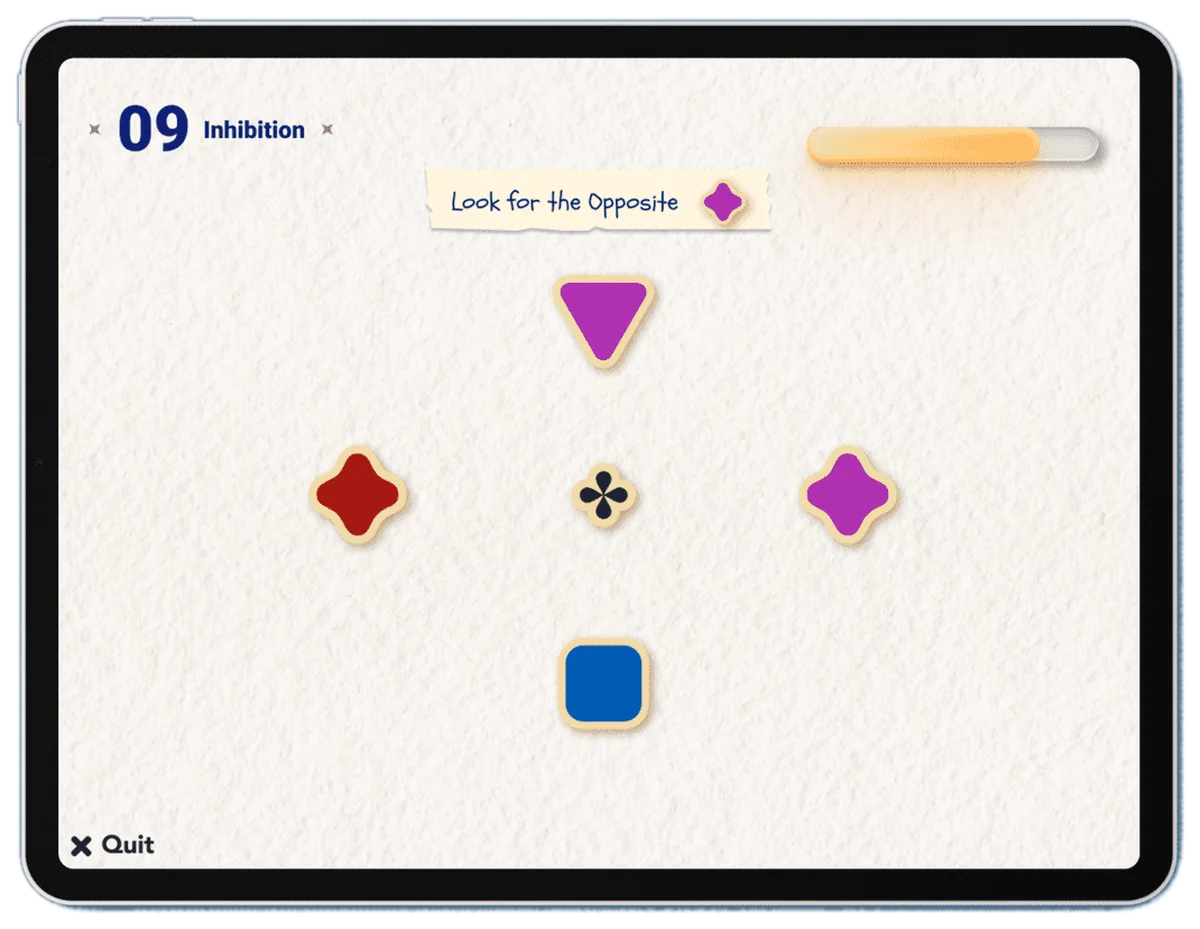
Each skill is measured separately, against national UK norms based on schools from 12 locations representing the demographics of the UK (see the evidence). The profile matters more than any total. A child with strong reasoning and a full mental notepad needs different support from a child with the same grades whose difficulty is getting started at all.
Measure the why, then act on it.
This is the gap Veyra: Mind Skills Check was built for. 12 short tasks, in one lesson, measure the driver's skills for every pupil, alongside reasoning and memory. For the pupils who need more, a Student Report then explains the profile in plain English, strengths first, with an action plan attached. Veyra: Pebble Academy, our training game, is coming soon: it will train the skills each pupil's Skills Check flagged.
None of this replaces the tests a school already runs. It answers the question those tests keep raising and cannot answer: this child is capable, so what is getting in the way?